




Porcelain Tiles from China: A Project Buyer's Guide to Cost and Quality
A project buyer's guide to porcelain tiles from China: 2026 costs, MOQ and container maths, quality checks that work — and the duty map that decides which markets are viable.

Ivana Li
George Group · Senior Sales Director
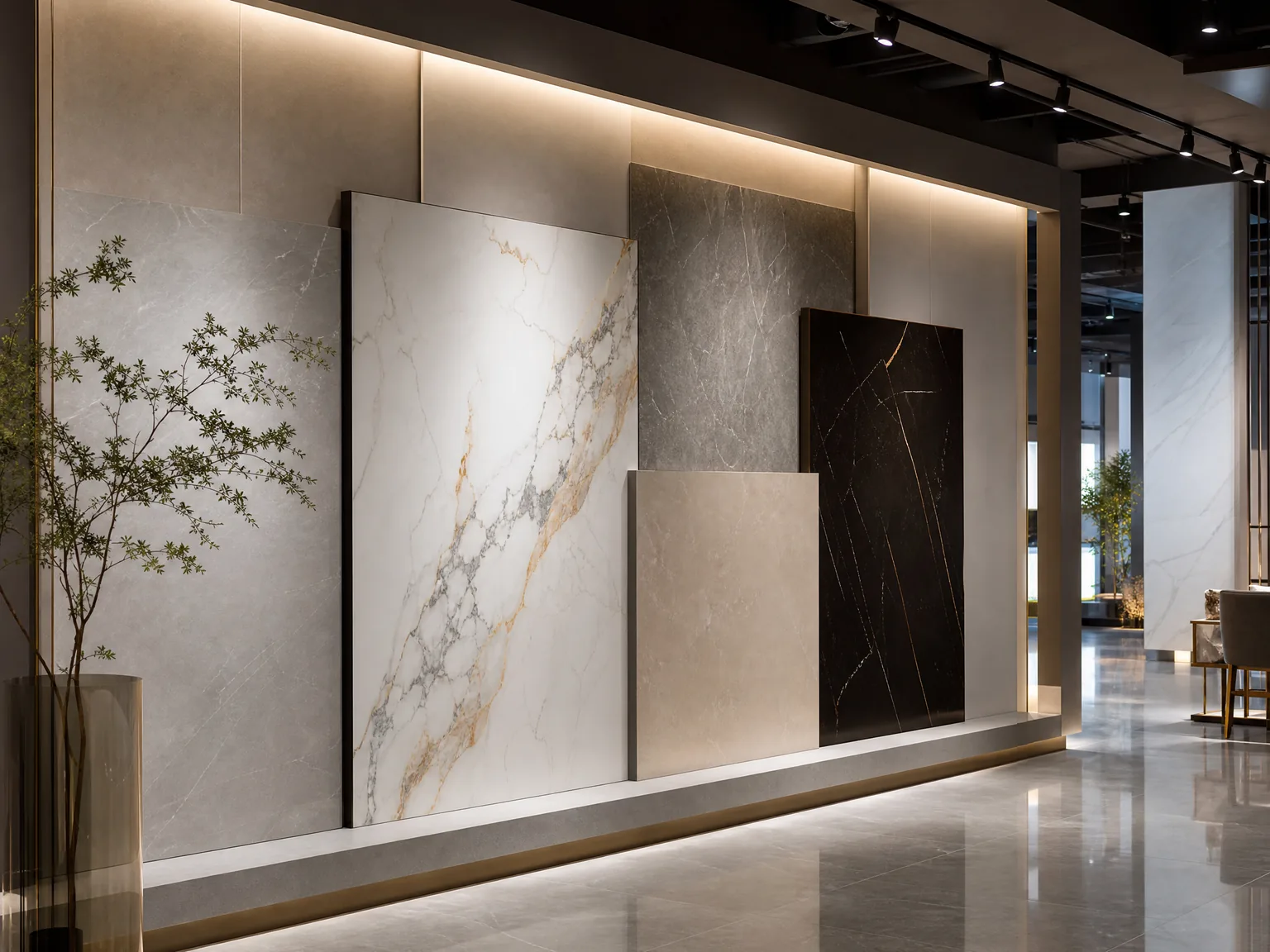
Importing porcelain tiles from China makes sense when you buy by the container: hotel floors, villa projects, apartment blocks, distribution stock. Foshan, where our factory group is based, produces a large share of the world's porcelain tile, and at project quantities the ex-works price advantage over European supply is real. This guide is about buying well: what porcelain actually means in specification terms, what it costs in 2026, how the container maths works, and how to keep quality problems and duties from eating the saving.
Two honest warnings up front. First, tiles are the heaviest cargo we ship — a container fills by weight, not by volume, and the logistics differ from furniture. Second, the destination decides whether the economics work at all: Chinese porcelain tiles entering the United States currently stack roughly 735% in combined duties and deposit rates, which closes that market commercially, while the UK, the EU and the Gulf each play by different rules. Both points get full sections below.
Key takeaways
- Porcelain is a specification, not a style: water absorption of 0.5% or less under EN 14411 / ISO 13006 (Group BIa). Verify it with a test report and a two-minute water test — never with catalogue copy.
- Tiles ship by weight. A 20ft container takes roughly 900–1,000 m² of standard 10 mm porcelain — your order quantity, overage and breakage allowance all start from that number.
- The duty map is the decision: US-bound Chinese tiles carry about 735% in stacked duties (commercially closed), the EU runs 13.9–69.7% depending on the shipper, the UK exempts large formats until November 2027, and the GCC stays at 5% with SASO/SABER certification.
Who should import porcelain tiles from China — and who should not
The economics of Chinese porcelain tile reward volume. If your project needs one container or more — roughly 900 m² and up of a standard format — factory-direct pricing, consolidated freight and a single document set will beat almost any alternative. Below that threshold, local wholesalers usually win on simplicity, and we will tell you so.
The buyers who gain most from this route are hotel and resort developers tiling many identical rooms, contractors on multi-unit residential work, villa owners doing whole-house floors, and importers building distribution stock. The buyers who should pause are anyone shipping to the United States — the duties section below explains why that market is effectively closed for Chinese-origin tile — and anyone who needs fifty boxes for a single bathroom renovation. Freight, minimum quantities and breakage risk make small orders irrational, and no honest supplier should encourage one.
Porcelain, ceramic, vitrified: know what you are buying
Ceramic tile is the broad family; porcelain is the dense, vitrified member of it. The dividing line is technical, not marketing: water absorption of 0.5% or less by weight, classed as Group BIa under EN 14411 / ISO 13006. What the Middle East and South Asia call vitrified tile is the same idea under another name. Porcelain itself splits into glazed porcelain (a printed or coated surface over a porcelain body) and full-body porcelain (the colour runs through the tile, so chips and wear are far less visible — the right choice for hotel corridors and commercial floors).
Four field checks identify real porcelain faster than any catalogue. Put a few drops of water on the back of the tile: on true porcelain the water beads and stays; on ordinary ceramic it darkens the body within a minute. Lift it: porcelain at 10 mm runs roughly 23–25 kg per m², noticeably denser than ceramic. Look at the chipped edge or the back: a full-body tile shows the same colour all the way through. Tap it: porcelain rings, ceramic thuds.
For the purchase order, the specification line matters more than the product name. Write down size and thickness, surface finish (polished, matt, structured), water absorption, the PEI abrasion class for glazed surfaces (ISO 10545-7, graded I–V — III suits residences, IV–V for hotels and commercial floors), breaking strength (ISO 10545-4), and a single shade-and-calibre batch for the whole quantity. A supplier who hesitates at any of these is telling you something.
What porcelain tiles from China cost in 2026
There is no catalogue price for project tile, and you should distrust anyone who quotes one. Here is where ex-works Foshan prices typically land this October, in USD per m² — where you land inside each range is set by size, thickness, surface finish and order volume:
Freight is the second line, and it moves weekly. Tiles rarely ship in 40ft boxes — weight caps them — so treat the 40ft index below as the market level and expect your forwarder to quote 20ft rates per booking. As of 15 October 2026, Drewry's World Container Index assessed the main lanes at:
| Lane | Freight per 40ft (15 October 2026) |
|---|---|
| Shanghai – Rotterdam | $3,522 |
| Shanghai – Los Angeles | $7,884 |
| Shanghai – New York | $10,075 |
| Composite index | $4,485 |
The third line is the one most quotations hide: duties. For tiles they are not a rounding item but the decision itself — up to several times the cargo value on some lanes. That deserves its own section, below. We quote in USD, itemised line by line, so you can compare our landed cost against any local quotation.
Send your finish schedule or BOQ and we return an itemised quotation with current freight within one working day:
MOQ, containers and the weight problem
Tile factories run production in batches per colour and design, so the practical minimum is typically 500–1,000 m² per item; designs in running stock can go lower. But the real MOQ is container economics. Tiles are weight-limited cargo: a 20ft container legally loads around 26–27 tonnes of tile long before it looks full. That weight ceiling, not the cubic volume, sets how much you ship.
| Format and thickness | Typical weight per m² | Planning quantity per 20ft container |
|---|---|---|
| 600×600 mm, 10 mm glazed porcelain | ~23–25 kg | ~900–1,000 m² |
| 750×1500 mm, 12 mm large tile | ~28–30 kg | ~750–850 m² |
| 600×600 mm, 20 mm exterior paver | ~46–50 kg | ~450–500 m² |
| 1200×2400 mm slab, crate-packed | varies by body | ~250–350 m² (crate volume binds first) |
Treat these as planning figures, not promises — palletisation, crate timber and port weight rules shift every shipment. Your supplier should state the exact loaded weight and carton count on the packing list.
There is a useful flip side to the weight problem. A pure tile container hits its weight limit with cubic space to spare, which makes tiles the ideal base cargo in a mixed container: the tiles provide the weight, and sanitary ware, lighting or furniture fill the air above them. One project, one container, one document set — this is where a whole-home supplier earns its keep over a single-category factory.
Quality control: batch consistency, breakage and claims
The three failure modes in tile are not dramatic — they are a shade off between cartons, a calibre half a millimetre apart, and breakage discovered at receiving. All three are preventable on the buyer's side, but only if they are specified before production.
1. Lock one batch. Every carton carries a shade code and a calibre code; your entire quantity should come from a single production batch, and that clause belongs in the purchase order. Then order 5–10% overage from the same batch — cutting waste on site is real, and matching your shade six months later is not.
2. Approve a golden sample. A signed, sealed physical tile is the reference for colour, surface and edge quality; production and inspection both measure against it. Product images on a screen are never the final approval.
3. Inspect before the container closes. Current third-party rate cards run roughly $150–$350 per inspector-day (SGS, Bureau Veritas, QIMA) — a rounding error against a container of tile. We welcome inspections arranged by you, and our own photo records cover raw material, production and pre-packing stages either way.
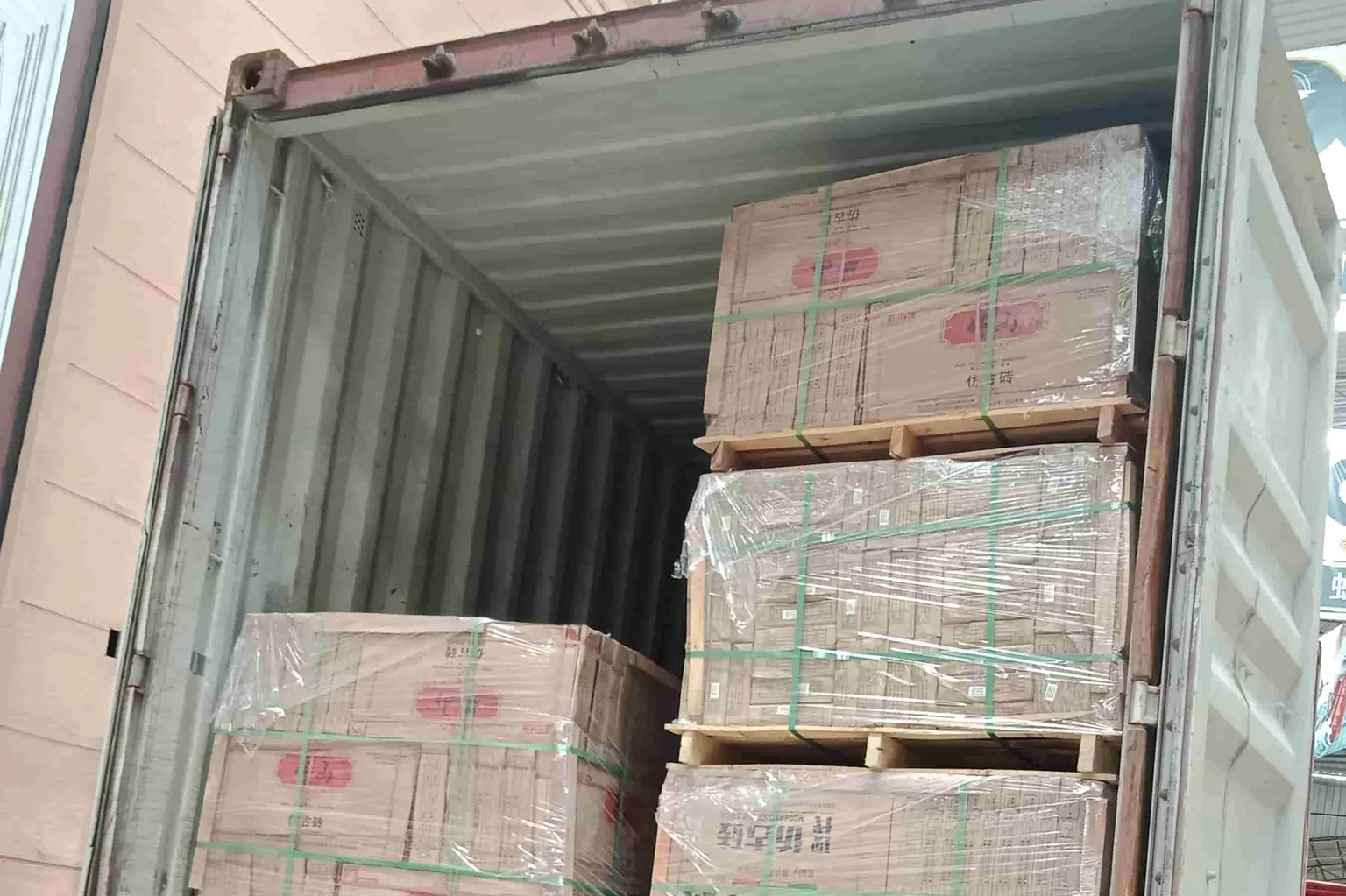
4. Specify export packing and plan for breakage. Pallets, corner protection and shrink wrap are standard for export tile; plan a 2–3% transit breakage allowance, photograph any damage at receiving before the container leaves your site, and file claims against the packing list. Replacement stock ships with your next order or credits against the balance — agree which, in writing, before the first container sails.
Duties and certification: the destination decides
For tiles, more than for any other category we sell, the destination market decides whether importing from China works at all. The same 1200×2400 mm slab leaves our warehouse at one price and arrives at three different realities:
| Destination | Duty position on Chinese porcelain tile (October 2026) | What it means in practice |
|---|---|---|
| United States | MFN 8.5% + Section 301 25% + a further 301 duty of 12.5% (since July 2026) + anti-dumping cash deposit 330.69% + countervailing 358.81% — roughly 735% nominal, covering porcelain regardless of water absorption, and both orders were extended in March 2026 | Commercially closed. Deposit rates are set at liquidation, so confirm with your broker — but no landed-cost model survives this stack. Our US-based clients use us for projects outside the US, or for categories with viable duty positions |
| European Union | Anti-dumping 13.9–69.7% depending on the producer under Regulation (EU) 2024/493; unlisted producers pay 69.7%. CE marking under EN 14411 (Construction Products Regulation) required | Viable only through listed cooperating producers at the lower rates — ask which anti-dumping rate your exact shipment carries before you compare prices |
| United Kingdom | Same 13.9–69.7% table, but tiles with a surface over 0.36 m² or any side over 600 mm are exempt (additional code 8A58) — the exemption runs to 24 November 2027 under Trade Remedies Notice 2024/10 | The one real window into Europe for Chinese large-format slabs — format selection is now a tariff decision, not just a design one |
| GCC / Saudi Arabia | 5% GCC common external duty, no trade remedies. Saudi requires SASO technical regulation 03-07-17-161 compliance with SABER certification — a product certificate (PCoC) plus a per-shipment certificate (SCoC); 15% VAT applies in Saudi | The lowest-friction market for Chinese tile, but certification must start before production, not at the port |
Two cautions apply to every row. Deposit rates are not final liabilities — anti-dumping settles at liquidation — and your exact HTS heading decides your exact rate; verify it in the official USITC tariff database or with your broker before you sign anything. We quote in USD, ex-works or to your port, and your coordinator maps the duty position for your destination as part of the quotation.
How George Group runs a tile order
George Group was founded in Foshan in 2006 — twenty years, 10,000+ projects delivered across 50+ countries, and a 30,000 m² showroom open by appointment. A tile order runs like this:
1. You send the finish schedule, BOQ or drawings. Our team returns an itemised quotation — tile by tile, freight at current rates, duty position flagged for your destination.
2. Physical samples before production. Finish panels couriered to you; the approved tile is sealed as the golden sample the production line measures against.
3. One batch, locked. Your full quantity is produced from a single production batch, with photo records at raw-material, production and pre-packing stages.
4. Pre-shipment inspection and loading evidence. Third-party inspection arranged by you is welcome; we add a carton-by-carton packing list and container loading photos, so you see exactly what left the factory.
5. One container, one document set. Tiles alone, or consolidated with the sanitary ware, lighting and furniture on your schedule — the FF&E procurement guide covers how the mixed-container maths works for the movable side of a project.
If you want to walk the formats first, the Foshan showroom stages tiles, slabs and every other whole-home category under one roof — we will help with the schedule.
Your porcelain tile sourcing checklist
Before you request quotations — ours or anyone's — have these ready:
1. A specification sheet per tile: size, thickness, surface finish, water absorption (0.5% or less for porcelain), PEI class for glazed surfaces, and breaking strength.
2. Quantities in m² with container maths — which formats fill how many 20ft containers, plus 5–10% overage from the same batch.
3. A single-batch clause for shade and calibre, written into the purchase order.
4. A golden sample you have approved physically, not on screen.
5. An inspection plan — the supplier's photo records, third-party inspection ($150–$350 per inspector-day), or both.
6. A packing and labelling spec — pallets, corner protection, carton markings by room or zone if the project is phased.
7. Your duty position, confirmed for your destination — and a landed-cost comparison, line by line, in one currency. We quote in USD; compare like with like.
Send your finish schedule or BOQ — a coordinator replies with an itemised quotation and a production schedule within one working day:
Questions importers ask us first
Straight answers on minimum orders, lead times, shipping and payment — before you commit.
Ivana Li
Senior Sales Director
Ten years focused on the global furniture and building-materials market, with deep project experience — you speak to her directly on WhatsApp.
Replies within one working day
Still have a question?
Send your list and get a costed, itemised answer — no obligation, no sales pressure.
What is the difference between porcelain and ceramic tiles?
Water absorption. Porcelain tile absorbs 0.5% or less by weight (Group BIa under EN 14411 / ISO 13006); ordinary ceramic absorbs more. That density makes porcelain harder, more frost-resistant and more wear-resistant — and is why it suits hotel corridors, commercial floors and exteriors where ceramic would fail.
What is the minimum order for porcelain tiles from China?
Factories run production in batches per colour and design, so the practical minimum is typically 500–1,000 m² per item; designs in running stock can go lower. The real threshold is container economics — below roughly one container (about 900 m² of standard 10 mm tile), freight and handling usually erase the ex-works saving.
How many square metres of tile fit in one container?
Tiles ship by weight, not volume: a 20ft container loads around 26–27 tonnes. As planning figures, that is roughly 900–1,000 m² of standard 10 mm porcelain, 750–850 m² of 12 mm large-format tile, or 450–500 m² of 20 mm exterior pavers. Crate packing and port weight rules shift every shipment — your packing list should state the exact loaded weight.
How long does a tile order from China take?
Typical production runs 20–35 days depending on formats and finishes, plus sea freight to your port — roughly two to five weeks depending on the lane. Your coordinator confirms a per-project schedule in writing before any deposit.
Can I import porcelain tiles from China into the United States?
Commercially, no. Chinese ceramic and porcelain tiles entering the US stack MFN duty, two Section 301 layers, a 330.69% anti-dumping cash deposit and 358.81% countervailing duty — roughly 735% nominal, and both trade-remedy orders were extended in March 2026. Our US-based clients use us for projects delivered outside the US, or for categories with viable duty positions.
How do I check tile quality before the container ships?
Approve a physical golden sample first, lock one production batch for shade and calibre, and inspect before loading — third-party inspectors (SGS, Bureau Veritas, QIMA) run roughly $150–$350 per inspector-day. Add the supplier's photo records at raw-material, production and pre-packing stages, plus container loading photos, and you know exactly what left the factory.
What certifications do I need for Saudi Arabia or the EU?
Saudi Arabia requires compliance with SASO technical regulation 03-07-17-161 via the SABER platform — a product certificate (PCoC) plus a per-shipment certificate (SCoC) — started before production. The EU requires CE marking under EN 14411 (Construction Products Regulation) and applies anti-dumping duties of 13.9–69.7% depending on the producer; the UK exempts large-format tiles (over 0.36 m² or any side over 600 mm) until November 2027.
Who is George Group?
A factory group founded in Foshan in 2006 — twenty years, 10,000+ projects delivered across 50+ countries, and a 30,000 m² showroom open by appointment. We manufacture across every whole-home category — kitchen cabinets, wardrobes, doors and windows, stone, tiles, bathrooms, lighting and furniture — so a tile order can ship alone or consolidated with the rest of your project in one container.